William Chester Minor’s mental illness and persecutory delusions
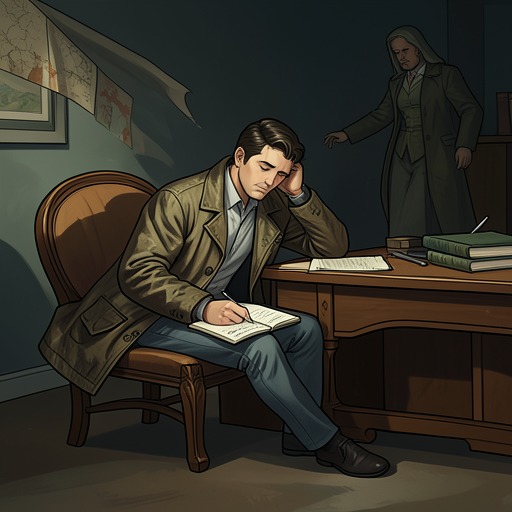
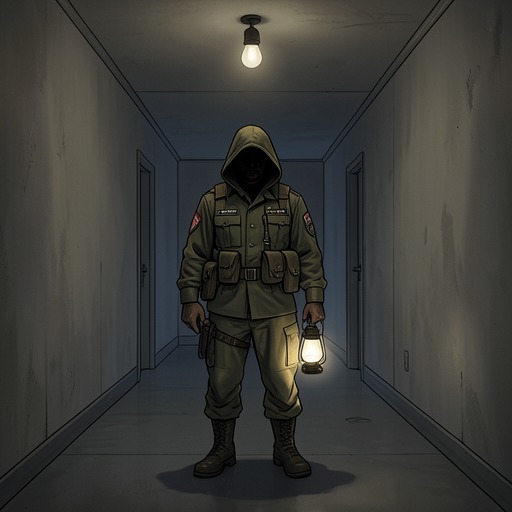
The Surgeon of CrowthorneWilliam Chester Minor’s mental illness and persecutory delusions transformed suspicion into an all-encompassing account of threat: he believed that people were entering his rooms, poisoning him, and conspiring against him. The symptoms appeared during his military years, intensified in London, and became central to the court’s explanation of his killing of George Merrett. The successive labels applied to his condition record changing psychiatric thought, but they do not settle what caused his illness or how it might have been altered by different care.
Military signs and early diagnosis
During his service in the United States Army, Minor began to suspect that fellow soldiers were muttering about him and watching him. He became convinced that one officer, described by the fort commander as a close friend, was provoking and persecuting him. Minor challenged the officer to a duel and was reprimanded. Those around him could find no apparent reason for the rupture, and the episode was recalled as an early sign of a change that his friends and family found distressing. His watercolours of Florida sunsets offered a quieter counterpoint: his fellow officers still regarded him as an artistic man, even as his suspicions grew.
The crisis became unmistakable in the summer of 1868. After reportedly spending too long in the Florida sun, Minor complained of severe headaches and vertigo and was escorted to New York for examination. On 3 September, Surgeon Hammond described him as suffering from monomania, a period term for an intense fixation on a single subject, and judged him delusional. Hammond did not specify the subject of the supposed monomania, an important limit in the surviving account. The diagnosis therefore documented the seriousness of Minor’s condition without explaining its content or cause.
Military doctors soon considered him unfit for duty and unable to travel. By November, an examining doctor judged the monomania to be suicidal and homicidal, and recommended that Minor enter the Government Hospital for the Insane in Washington. Minor was willing to go, but was ashamed of being publicly associated with an asylum. A request for him to be admitted without a guard or general knowledge of his treatment succeeded: he travelled secretly to Washington and remained at the institution for eighteen months. Later assessments were pessimistic. Army doctors reported that his condition remained markedly disturbed and that a long time might pass before he recovered; his commanders ultimately concluded that he was unlikely to be cured and placed him on the Army Retired List.
Persecution in London
By the time of the 1872 murder trial, Minor’s fears had acquired a recurring cast of intruders and pursuers. He told police that unknown men, often Irish and of lower social standing, came into his room while he slept and maltreated him. He believed the imagined visits had continued for months. His landlady, Mrs Fisher, described a tenant who seemed anxious, sometimes travelled away for several days, and insisted that furniture be moved because he feared people might break in. She also recalled his repeated questions about Irish servants and visitors, and his demands that any Irish servants be dismissed.
Minor had brought his fears to official attention before the killing. A detective at Scotland Yard testified that Minor had visited the Yard three months earlier, alleging that men entered his room at night and tried to poison him. He identified them as members of the Irish Republican Brotherhood and imagined them hiding in the roof or entering through windows. Shortly before Christmas, he arranged for the Commissioner of Police in New Haven to send a letter supporting his concerns. After moving to Tenison Street, he wrote again to the detective on 12 January, claiming that he had been drugged and that his supposed pursuers intended to kill him and make his death appear to be suicide. The detective recorded his own conclusion that Minor was insane but took no further action. The book presents this failure as a missed opportunity to recognize a distressed man’s repeated requests for help.
The trial also drew on observations of Minor during his remand at Horsemonger Lane Gaol. William Dennis, a Bethlem Watcher assigned to observe him for twenty-four nights, described a repeated morning pattern: Minor accused him of having been paid to molest him during sleep, spat repeatedly as if trying to clear something from his mouth, and searched under his bed for people he believed were hiding there. Dennis told the prison surgeon that he thought Minor was mad. These observations, like the police testimony, show how the same underlying conviction surfaced in different settings and through different witnesses.
The killing and legal judgment
Minor’s own account linked his delusions directly to the killing of George Merrett. He said he awoke believing that a man stood near the foot of his bed, reached for a loaded Colt revolver kept beneath his pillow, and pursued the figure he believed had fled from the house. He claimed to have followed the man into Belvedere Road and fired at him. Mrs Fisher rejected the possibility of an intruder, telling the court that no one could enter her house at night without a key and that the occupants slept lightly. The trial thus placed Minor’s account of persecution beside evidence that challenged its premise.
His stepbrother, George Minor, described similar beliefs from an earlier period in New Haven: Minor accused people of trying to enter his room, imagined that substances were being put in his mouth, and believed that people hid in the attic and came to torment him at night. He also connected these imagined assaults to an act he had been forced to commit while in the army, and believed that travelling to Europe might let him escape his persecutors. The testimony made the pattern appear longstanding, rather than an explanation first devised after the killing.
The court applied the M'Naghten Rules, which addressed criminal responsibility by asking whether a person of unsound mind had acted under a delusion. On the afternoon of 6 April 1872, the jury found Minor not guilty on grounds of insanity, without deliberation. The judge ordered his detention at Her Majesty’s pleasure. The ruling distinguished legal responsibility from the fact of the killing, while placing the decision about his custody in the hands of the state. It also converted the accounts of his delusions—from his military history, his London complaints, and the prison observations—into the legal grounds for indefinite confinement.
Changing psychiatric language
The medical descriptions of Minor’s condition changed over time. In 1868, monomania offered a broad explanation of an intense fixation; in the London trial, witnesses and officials described him as insane, without a more developed psychiatric account. At St Elizabeths Hospital, on 8 November 1918, his attending psychiatrist, Dr Davidian, formally diagnosed dementia praecox, of the paranoid form. The designation marked a shift from the loose Victorian vocabulary of monomania and moral treatment toward a psychiatric classification intended to describe a particular disorder.
The book explains that dementia praecox, a term introduced by Emil Kraepelin, referred to an early loss of contact with reality and distinguished the condition from senile dementia. It was also conceived as different from manic-depressive psychosis. The later term schizophrenia first appeared in 1912, but applying modern terminology retrospectively does not make the historical record more certain than it is: Minor’s 1918 diagnosis was dementia praecox of the paranoid form, and the name and understanding of the illness continued to change. The diagnostic history is therefore a record of medical classification as well as of Minor’s symptoms.
Causes, care, and the dictionary
The book leaves the origins of Minor’s illness unresolved. It asks whether exposure to the horrors of the Battle of the Wilderness might have contributed to his later behaviour, while also considering inherited vulnerability and temperament. It notes that two of his relations had died by suicide, though the circumstances are uncertain, and describes Minor as a painter, flautist, and collector of old books. These details suggest possible lines of inquiry in the book’s account; they do not establish a cause. Its discussion likewise resists treating trauma as a complete explanation, observing that Minor’s symptoms endured throughout his life.
The account also compares the treatment available to Minor with later psychiatric care. His confinement at Broadmoor Asylum did not improve his condition, and the book speculates that a more compassionate regime might have mitigated some of his distress. It contrasts the sedatives emerging near the end of his life with later antipsychotic medication, while stressing that even contemporary medicine has not resolved the origins of schizophrenia. This comparison is presented as a counterfactual possibility, not proof that a different treatment would have cured Minor.
Against that history, Minor’s work for James Murray on the Oxford English Dictionary occupies an unusual place. The book describes the quiet, repeated intellectual routine of preparing dictionary slips as a form of therapy: a fixed task that gave his attention somewhere to settle and appeared to provide some release from paranoia. It does not claim that the work removed his delusions. Rather, the contrast is between a mind repeatedly drawn into imagined threat and a sustained scholarly practice organized around words and evidence. When the Dictionary ceased to serve as that lodestone, the book says, Minor’s condition worsened. His case thus joins psychiatric history to the history of lexicography without making either a simple cure for the other.